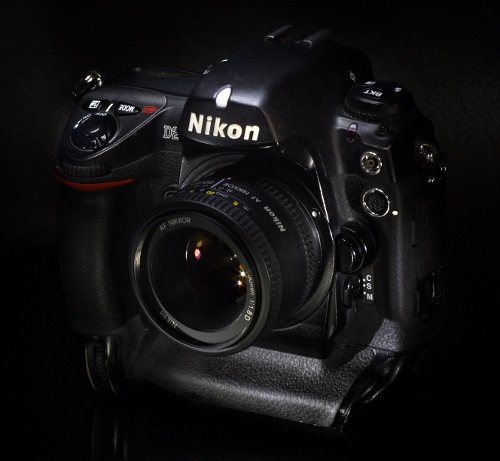
Nikon D2H eating a Nikon 50mm f/1.8D.
from Shutter, by Lewis Collard
Shutter DEAD on actuation #400,195. The rest of this article is from late 2009 and updated in April 2012. Rest in peace.
Nikon D2H eating a Nikon 50mm f/1.8D.
You read that right: Over three hundred and ninety thousand shutter actuations. This is the Nikon D2H, the first of Nikon's second generation of practical professional digital SLR cameras, succeeding the D1 series. It's a obsolete, massive, violently fast digital camera.
(If anyone else has one of these with a crazy number of actuations, I'd love to hear from you, especially if you can beat my high score.)
Jump to: Body | Buttons everywhere! | Shutter | Digital guts | Lens compatibility | File formats | Battery | Durability | Performance | ISOs | Ergonomics | Autofocus | Frame rate | Buying one
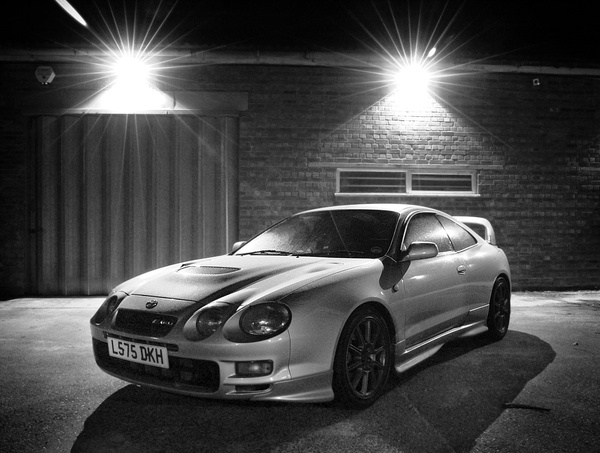
Toyota Celica GT-Four.
Nikon D2H, 18-70mm DX at 18mm wide-open, ISO 200 at 8 seconds and
f/11.
All-metal chassis (including the lens mount) and fricking huge. It's the largest 35mm or digital SLR camera that I've ever had in my hands. As in it's seriously, face-coveringly huge:

The colourful haired one hiding behind a D2H.
It's also heavy! The body, without a lens or battery weighs 1,070g. Even with a teeny plastic lens like an 18-55mm DX, a running setup will weigh at least a kilo and a half. I'm used to this kind of weight, but most people will start to feel it if they spend as much time on their feet as I do. I cram mine (including 55-200mm DX VR, 18-55mm DX and 50mm f/1.8, and an Olympus Trip 35, as tight a fit as anything gets) into a tiny LowePro Nova 1 shoulder bag in between shoots, which makes it slightly more bearable.
Interestingly, the rubber grip seems to have grown over time, to the point that it no longer fits the camera properly, and made it impossible to turn the aperture dial. I fixed this with a craft knife and a steady hand.
Ian and Ammo.

Tiny
teddy watches the sun rise. Nikon D2H, 50mm f/1.8D at f/2.8, ISO 200
and 1/100, shutter actuation #388,291.
Focal plane shutter, top speed of 1/8000 (faster than anyone ever needs, even if you're shooting at base ISO in daylight at f/1.8). Shoots at a maximum of 8 frames a second. It's an impressive sound, if nothing else; almost, but not entirely, unlike a slightly quieter Praktica MTL3, on crack. Here's the D2H running at 8 frames a second (MP3 file)).
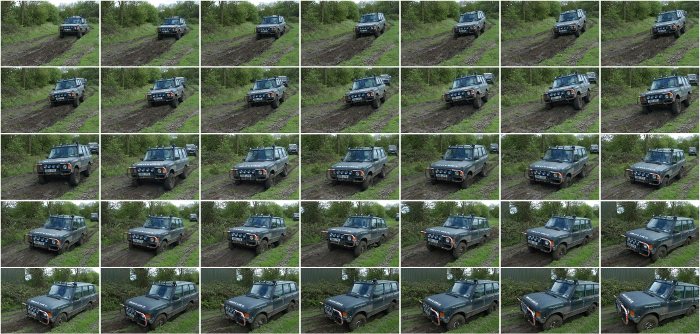
The above almost demonstrates how fast 8fps is. You could almost shoot a movie that way! Actually, Nikon did record an advert for the Nikon F5 by shooting the F5 at 8fps; you can see the video on YouTube over here. Few people really need 8 frames a second, but who cares, it sounds cool, which is the only reason why anyone but professional photojournalists, sports photographers and wildlife photographers bought these when they were new.
Flash sync is at 1/250. The older D1 series and many of the modern much cheaper cameras can do 1/500. It's the same as my Canon T90 from 1986.

Twiggy. Nikon D2H, 18-55mm DX at 18mm wide-open, ISO 200
at 1/160, shutter actuation #379,339.
At the heart of it all is a 4.1mp JFET sensor, designed by Nikon (most Nikon cameras use Sony sensors), with about a 1.5x crop factor over 35mm film. I don't know what JFET means either.
There is a perennial debate whenever Nikon comes out with a new pro camera: "are there enough pixels"? It happened with the D2H, it happened with the D3, and it's happening again with the D4. The people who actually shoot professional-grade Nikon cameras just get out there and shoot, of course.
4.1mp doesn't sound like a lot, and isn't. It's enough to get you 8" prints at 300dpi if you don't crop, or 12" prints at 200dpi, so it's not as awful as it sounds.
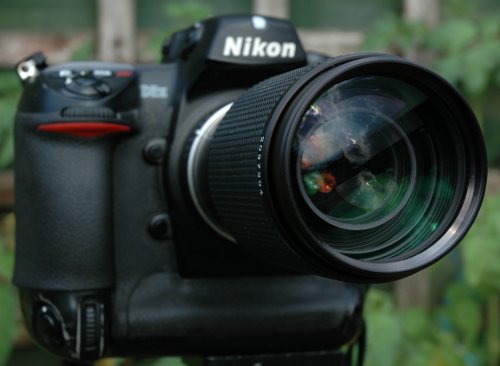
The Nikon D2H with a
Series E 70-210mm f/4
manual focus lens from the early
1980s.
It's compatible with almost every Nikon lens made from 1977 (I say "almost" because I'm not sure how this will play with weird ones like the 24mm PC-E). It'll be perfect with any autofocus lens. Manual focus AI and AI-S lenses (including the Series E lenses, one of which is pictured above) will work in aperture priority mode, and you'll even get matrix metering if you dig through the menus and set your focal length and maximum aperture under "Non-CPU Lens Data". Don't bother with anything pre-1977; these lenses won't even mount on the D2H.
I use two of Nikon's cheapest DX zooms (55-200mm VR and non-VR 18-55mm) and their cheapest AF lens (50mm f/1.8D) on mine. I put the 70-210mm on the D2H as a joke for the photo above, but it turns out it's actually an excellent lens, and I now use it for all my product photography.

Adele. Nikon D2H, AF Nikkor 50mm f/1.8D at f/2, 1/80
at ISO 200, shutter actuation #379,223
Fine, Normal and Basic JPEGs, in Large (2464x1632) and Medium (1840x1224) sizes. There's also 12-bit uncompressed raw, which can be shot by itself or in tandem with either Fine, Normal or Basic JPEGs (at Large image sizes).
I usually shoot Large/Fine JPEGs, and when I need raw I'll shoot raw+large JPEG. 8 frames a second fills a card pretty quick, so if I'm going all-out I sometimes find myself dropping back to Normal JPEGs, which use about half the space of a Fine JPEG for a invisible image quality penalty.
It also shoots TIFF, which is useless for actual photography; fine JPEGs use so little compression that they are identical to uncompressed TIFF files, even if you're pulling extreme contrast curves out of them. The TIFFs don't give you any more bit depth either; they have 8 bits per RGB channel, just like JPEGs do. What's more, they're actually larger than uncompressed 12-bit NEF (raw) files; 11.6 megabytes instead of 6. I'd expect this was baked in to fit in environments that insist on TIFF files, like document copying.(If you're wondering how an uncompressed 12-bit raw file can be smaller than an uncompressed 8-bit TIFF file, it's simple: the NEF files are raw uninterpolated sensor data, whereas the TIFFs have passed through Bayer interpolation, which makes them more-or-less three times the size of what 8-bit sensor data would be.)
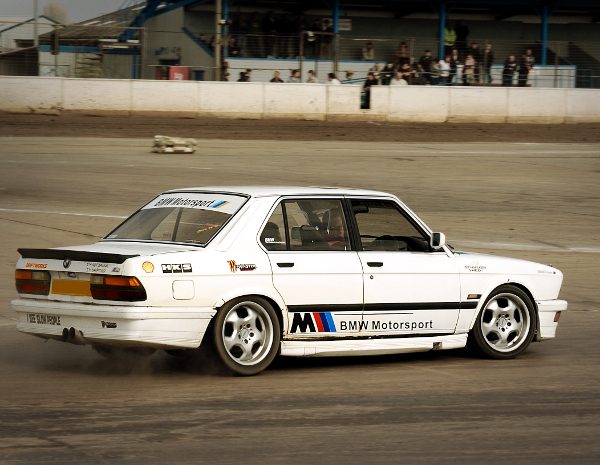
Awesome BMW E28 M5 of the
Norfolk
Drift Team. Nikon D2H, Nikon 55-200mm VR, 1/320
at f/12 and ISO 200, shutter actuation #397,272.
It takes a monstrous EN-EL4, which is heavier and volumetrically larger than some compact cameras I've used!
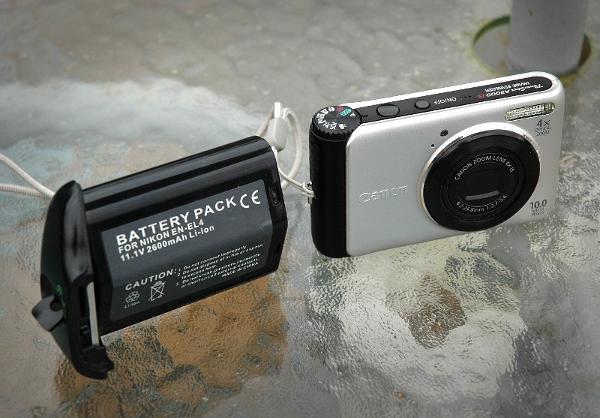
Next to a Canon A3000 IS.
Battery life is insane: I get several thousand shots on a charge. It goes so long on a charge that I've gotten out of the habit of charging regularly, which ironically makes it more likely that I will run out of battery in the field.
The eagle-eyed will have noticed that i'm not using a genuine Nikon battery; this is what came with my used D2H and I've never had a problem with it. It'd void the warranty if it hadn't expired years ago.

S. Nikon D2H, 55-200mm VR at 100mm
and f/11, ISO 200 at 1/500, shutter actuation #381,297.
Read that 390,000 shutter actuations number again. That is insane by any measure. If I were to take pictures at the D2H's full 8 frames a second, I'd have to hold the shutter button for more than thirteen hours to get that number of actuations.
I wonder if that's some kind of record. Probably not, but there's only one guy above me in the Shutter Life Expectancy Database entry for the D2H, at 921,452, and right after he resubmitted with 92,152, which means he probably made a typo.
It's a little bit battered. And by "a little bit" I mean "really":
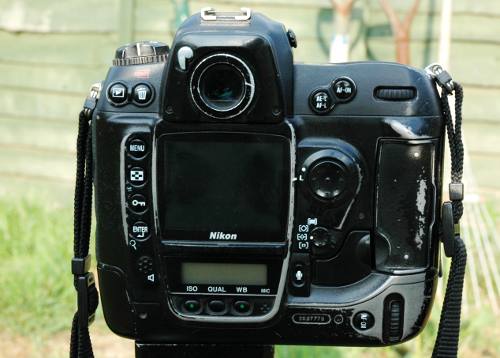
(apologies for the bad photo, I was rushing)
Hey, if you can't be a pro, do what I do: buy battered cameras so that you can look like one! Few people can tell the difference, y'know. Camera archaeology is fun. Look at the worn area around the vertical shutter button and control dial on the bottom left, when there's not nearly as much on the top. This was evidently used a lot in the vertical position. I'm guessing a photojournalist who did a lot of people shots.
The USB port cover went walkies some time ago:
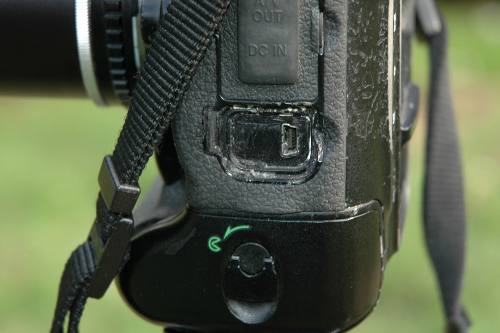
So yes, it still works, after more than three hundred and ninety thousand shutter actuations. Say hi to shot #381,780:

Curve. Nikon D2H, 55-200mm VR at 200mm and f/7.1,
ISO 200 at 1/200, shutter actuation #381,780.
Everything about the D2H is fast. It's something that has to be used to appreciate it fully.
The D2H is something that needs to be used to be appreciated. A few readers have contacted me before telling me that people who have owned a D2H urges them to get one instead of a newer used camera at the same price. I wouldn't go that far, but it does show that the speed, build quality and feel of the D2H is something intoxicating, and it's hard to go back to a slower, flimsier camera after using one.
Of course, the D2H is an old camera, so high ISOs are iffy, colour balance is imperfect, and dynamic range is rather limited. Still, even as I update this in 2012 after some experience using it for motorsports, it is still a spectacular camera for sports if you can live with its limitations.
The D2H is not a shoot-in-the-dark-handheld camera like today's SLRs. It's decidedly iffy by modern standards, as one would expect.
These observations are only for files straight from the camera; if you increase saturation or pull even a moderate contrast curve on your originals in post then there's visible noise even starting with a file shot at ISO 200.
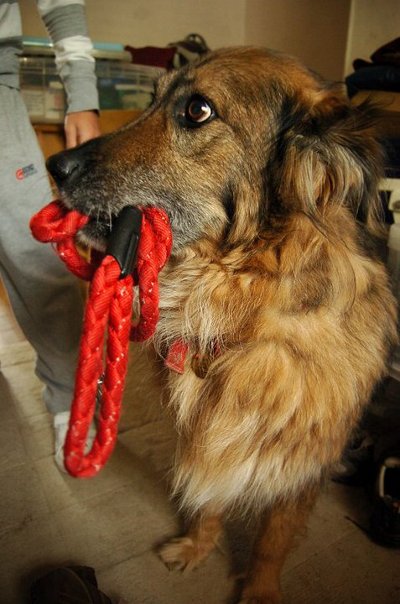
Bear (the dog) giving a very strong hint.
If you don't mind a huge heavy camera, the D2H is perfect, which is why the D3 barely changed them; the D4 (from what I've seen of it) had no choice but to make them worse by removing the dedicated rear AF-point-selection-mode switch.
Once you get the feel of it, you never have to think about the camera while you're shooting.
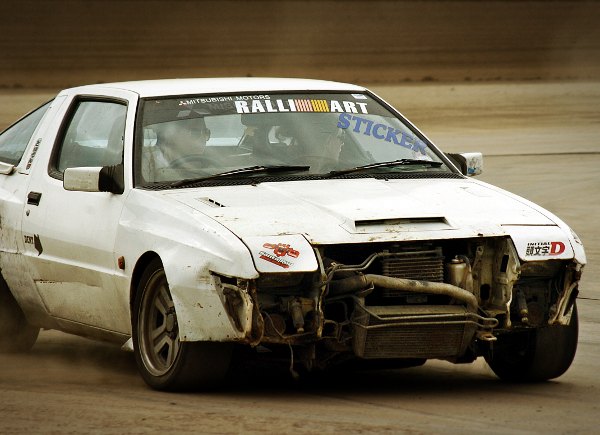
Awesome Mitsubishi Starion of the
Norfolk Drift Team. Nikon
D2H and Nikon 55-200mm VR, 1/350 at f/9.5 and ISO 200, shutter actuation
#396,635.
Autofocus is fast and always accurate. Even this worn-out one can rip a 50mm f/1.8D, a slow screw-type lens, from its closest 0.45m focusing distance to infinity and back in about three quarters of a second. You'll be limited by your lens' AF speed more than you will by the D2H.
It even works great with cheap lenses like the 55-200mm VR, though expect more hits than misses if you're shooting sports with a slow-focusing lens.
The dynamic area AF with closest subject priority mode (solid rectangle at the top position of the AF area mode switch) doesn't seem to work too well; it hunts a bit and sometimes refuses to find focus at all while fully zoomed in. I don't seem to have this problem in either of the single-area modes.
The D2H doesn't do any face-detection tricks like newer cameras. I typically leave mine in continuous (C on the front AF mode switch), and dynamic area AF or single-area AF.
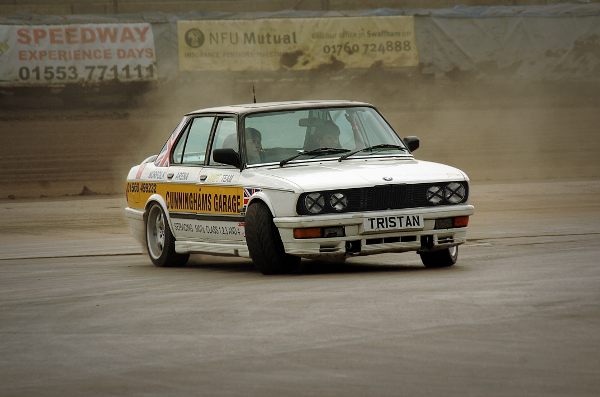
The other awesome BMW E28 M5 of the
Norfolk
Drift Team. Nikon D2H, Nikon 55-200mm VR, 1/320
at f/12 and ISO 200, shutter actuation #397,272.
Frame rate is the reason to buy one of these; not because many people need an 8fps camera, but because 8 frames a second sounds so cool. it drops back to 7fps if auto ISO is turned on.
Even blasting away at 8fps, autofocus works continuously and reliably. Thanks to the ultra-fast mirror return, the viewfinder isn't blacked out for long so it's easy to track your subject.

Stripes. Nikon D2H with Nikon 55-200mm VR, shutter
actuation #381,447.
I paid £250 in 2009 on eBay for this, plus another hundred quid a piece on a 50mm f/1.8D and an 18-55mm II. I started out looking for a small, light and more modern camera like a D40. I got curious and ended up with this, which is the largest and heaviest man-made object in the world:
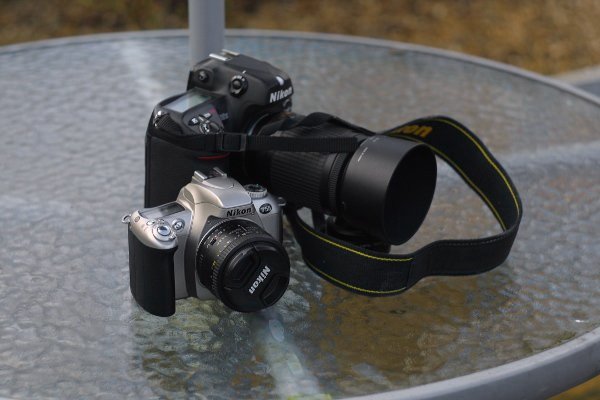
The Nikon D2H dwarfing a Nikon F55.
I think that was a little too much to pay for a D2H at all, let alone one whose shutter might explode at any moment. When that happens, I'll probably get a D1 for kicks. Heh heh. Really, if you really need 8 frames a second (or, like me, you like the sound of 8 frames a second), then go for it. If you have a sense of humour like me and just want want one for kicks, then get one too, but don't end up paying more than you should for a totally obsolete camera.
Buying one of these was slightly crazy in 2009. As I'm updating this piece in 2012, I wouldn't bother buying one used today unless you find a ridiculous bargain; any of the cameras since the D70 will give you better technical image quality.
Sane people on a budget might want to think about picking up a used, years-newer D200, which is lighter, smaller, and has better image quality, usually for less money. (I don't like the later cheap Nikons because they lack buttons for ISO and white balance.)

Another sparrow. Nikon D2H,
Nikon 55-200mm at 200mm and f/7.6, ISO 200 at 1/250, shutter actuation
#379,900.
